Every business owner we talk to knows that Google reviews matter. Nobody argues with that.
But when we ask what they’re actually doing about it, the answer is almost always the same: “We get them when we get them.”
They don’t have a system or a process for getting reviews. Reviews just happen organically, which usually means they don’t happen much at all.
The businesses with hundreds of reviews aren’t necessarily better at the service they provide. They just have two habits that most businesses don’t.
Habit 1: Proactively Ask for Reviews
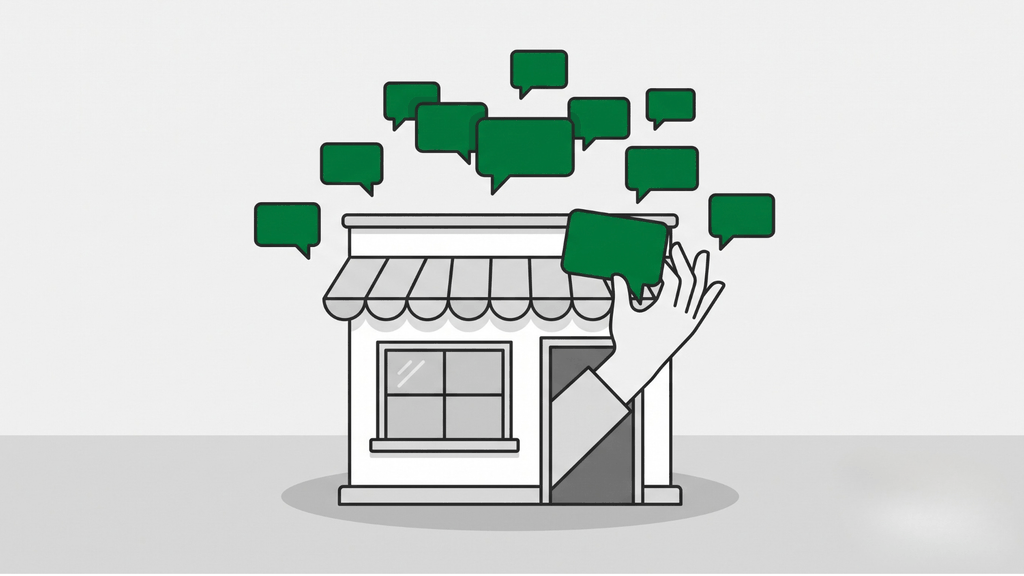
This is the big one. Most businesses wait for customers to leave reviews on their own. And some do, but many happy customers never get around to it.
The businesses generating a steady stream of reviews make asking part of their regular process rather than leaving it to chance.
We teach a framework called The 4 Rs of SEO™: Research, Relevance, Reputation, and Results. Most businesses focus on the first two and underinvest in Reputation. Reviews are the most visible, most accessible part of your online reputation, and they directly influence your local search rankings, your visibility in AI search tools, and whether a prospect chooses you over the competitor down the street.
Google confirms that review count and review score factor into local search rankings, and that more reviews and positive ratings can improve your local visibility. Reviews are only one part of the equation, but for two otherwise similar businesses, a stronger review profile can provide an important advantage.
Reviews are also becoming increasingly important as consumers use AI tools to find and evaluate local businesses. AI recommendations draw from a wider mix of signals than traditional Google Maps rankings, but a strong reputation across Google and other trusted sources gives these systems more evidence that your business is established and trusted. We’ve been writing about this broader trend in our article on The Invisibility Gap.
How to Make Asking a Habit
Ask consistently and fairly. Don’t limit your requests only to customers you expect will leave five stars. Selective requesting (only asking customers you think will be positive) is called review gating, and it violates Google’s policies. Your goal should be to build an honest review profile that reflects the experiences of your customers.
Ask at the right moment. The best time is shortly after you’ve delivered a result the customer is happy with. For a dentist, that might be after the appointment. For a home service business, it could be the day the job is completed. For a consultant, it might be right after a milestone or a win. The further you get from that moment, the less likely the review happens. We’ve seen businesses significantly increase their review volume simply by asking closer to the point of service and immediately following up with a direct review link.
Make it easy. Send the customer a direct link to your Google review form. Not a link to your website. Not a link to your Google Business Profile. The direct link that opens the review form in one click. You can find this in your Google Business Profile dashboard. The fewer clicks between “sure, I’ll leave a review” and the actual form, the more reviews you’ll get.
You don’t need to overthink the ask. Something like: “We’d really appreciate it if you’d share your experience on Google. I’ll text you the link so it’s easy to find.” That’s it. Keep it simple and genuine.
Build it into your operations. A review strategy only works if someone owns it. Assign it to a specific person or role on your team. Make it part of the workflow. Some businesses use automated tools that send a review request via text or email after each job. Others have front-desk staff mention it in person and follow up with a link. The method matters less than the consistency.
The goal is a steady stream over time rather than a one-time burst followed by months of inactivity.
Habit 2: Respond to Every Review
Most business owners know they should respond to negative reviews. But the habit that separates good businesses from great ones is responding to every review, including the positive ones.
When a prospect reads your reviews (and they will), they’re also reading your responses. A thoughtful response to a positive review shows you notice and value your customers. It turns a one-way testimonial into a two-way interaction. And it signals to every future prospect reading that page that there’s a real person behind this business who actually cares.
Google also encourages businesses to respond to reviews, noting that helpful replies show customers that you value their feedback and can help your business stand out.
How to Respond to Positive Reviews
Keep it brief, personal, and genuine. Reference something specific about the customer’s experience if you can. “Thanks for the kind words, Sarah. We’re glad the new patio turned out the way you envisioned” is better than “Thank you for your 5-star review! We appreciate your business!”
You don’t need to write a paragraph. Two or three sentences that sound like a real person wrote them is perfect.
How to Respond to Negative Reviews
This deserves more space than we can give it here, so we wrote a full article on it: How to Respond to Negative Reviews on Google: 3 Steps to Take.
The short version: stay professional, acknowledge the concern, and offer to resolve it offline. Never argue publicly. The response isn’t really for the person who left the review. It’s for every future prospect who reads it.
A calm, professional response to a one-star review often builds more trust than the five-star reviews around it. It shows prospects how you handle problems, and that matters more than a perfect score.
How Reviews Fit Into the Bigger Picture
In The Growth Formula, reviews serve two of the three levers. They strengthen Traffic by improving your local rankings and AI visibility. And they strengthen Conversion by building the trust that turns a searcher into a lead. That’s two levers from one activity that costs you nothing but consistency.
These two habits aren’t complicated. Ask for reviews consistently, and respond to the reviews you receive. Most businesses know they should be doing both. The businesses that turn them into routine habits build a stronger reputation and give themselves an advantage in both search visibility and conversion.
Want Help with Your Local SEO?
If you’d like us to take a look at your local search presence and identify the biggest opportunities to improve, we’d love to help.