With AI tools like ChatGPT on the rise, many business owners are asking: are the rules of SEO changing?
Does content still matter? Do backlinks still matter? And will everything we’ve learned about SEO over the past 20 years suddenly go out the window?
The short answer: yes, content and links still matter, but it’s not business as usual.
Google vs. ChatGPT: How They Work
Google and ChatGPT use very different systems to deliver results.
Google ranks web pages based on its search algorithm, which considers hundreds of factors, including backlinks, on-page content, keyword relevance, page speed, mobile usability, and user behavior. Google’s goal is to organize the web and point users to the most relevant and authoritative content for their query.
ChatGPT, on the other hand, is a generative AI language model. It generates answers based on its training data (information pulled from the open web, books, and other sources) and, in some cases, limited real-time browsing. It doesn’t use a ranking system, and it doesn’t always cite sources. Instead, it synthesizes information across many sources to provide a single, conversational response.
So while both Google and ChatGPT are trying to help users find useful information, they do it in fundamentally different ways.
The Overlap: Where Google and ChatGPT Align
Despite those differences, we’ve seen a strong correlation between Google visibility and ChatGPT visibility. When we’ve tested client websites that rank well in Google, we often see those same businesses show up in ChatGPT responses for related questions.
Why? Both platforms reward clear, helpful, trustworthy, and well-structured content. If your content ranks well in Google, there’s a good chance it’s also being used (or at least referenced) by AI tools.
But the overlap isn’t perfect. Google leans heavily on backlinks and technical SEO. ChatGPT focuses more on how clearly your expertise is communicated and how often your business is mentioned in credible places online.
That’s why SEO fundamentals still matter. They’re just evolving.
Want a deeper dive into why SEO is still worth investing in, even with AI changing how people search? Check out our companion post: Is SEO Still Worth It with AI Changing Search?
Action Plan: How to Improve Visibility in Google AND ChatGPT
Here’s the good news: improving your visibility in both Google and AI tools doesn’t require a completely new strategy. If you’re already doing SEO well, you’re most of the way there.
We use a framework called The 4 Rs of SEO that has worked for over 15 years, and it applies just as well to AI visibility as it does to traditional search. Here’s how each R connects to the new landscape:
Research: Know What Your Audience Is Actually Asking
The foundation of any SEO strategy is understanding what your customers are searching for and how they’re asking the question. For Google, this is well-established territory. There are keyword research tools that show you exactly what people are typing into Google and how often.
For AI tools like ChatGPT, it’s a different story. Those platforms don’t share search data the way Google does, so there’s no equivalent to keyword research for AI search. At least not yet.
So what can you do? Start with two things you already have access to. First, your Google keyword data, because there’s a strong overlap between what people search in Google and what they ask AI tools. Second, the actual questions your customers ask you every day, on the phone, in emails, during consultations. Those real-world questions are probably the closest thing we have to an AI keyword research tool right now.
Try asking ChatGPT the questions your customers typically ask you and see what comes up. You’ll quickly see whether your content is coming through or where it may be falling short.
Relevance: Create Expert, In-Depth Content That Matches Intent
Superficial content doesn’t cut it anymore. Both Google and ChatGPT are looking for content that demonstrates subject matter expertise and genuinely answers the user’s question.
That means creating blog posts, service pages, and guides that go deep into topics, use real examples, and reflect your actual experience working with clients. We’ve seen this firsthand: the clients whose websites consistently show up in AI responses are the ones with detailed, specific content that clearly demonstrates they know what they’re talking about.
Adding clear FAQs and summaries to your key pages also helps. These break down complex information into digestible pieces, which is especially useful for AI tools that are synthesizing answers from multiple sources. FAQs also increase the odds of showing up in featured snippets on Google.
Write in a natural, conversational tone. AI tools are trained on natural language, so if your content is written in an overly robotic or keyword-stuffed style, it’s less likely to be referenced. Write like you’d explain something to a client sitting across the table from you.
And keep your content updated. Both Google and AI tools favor accurate, current information, so regularly reviewing and refreshing your key pages is one of the simplest ways to stay relevant in both channels.
Reputation: Build Authority Across the Web
This is where the biggest shift is happening. Google has always rewarded authority through backlinks, but AI tools take a broader view. They consider how often and where your brand is mentioned across the web, not just who links to you.
To boost your authority, aim to get high-quality backlinks from reputable websites in your industry. Seek out guest posting opportunities, earn mentions in the press, build partnerships with industry associations, and submit your business to relevant directories. Make sure your business information is consistent and up to date across platforms like Google Business Profile, LinkedIn, Yelp, and local directories.
AI tools also rely on entity recognition, the ability to associate your brand with specific expertise. Use consistent naming, bios, and topic associations across your site and other web properties. For local businesses, make sure your name, address, phone (NAP), and website are identical across every citation.
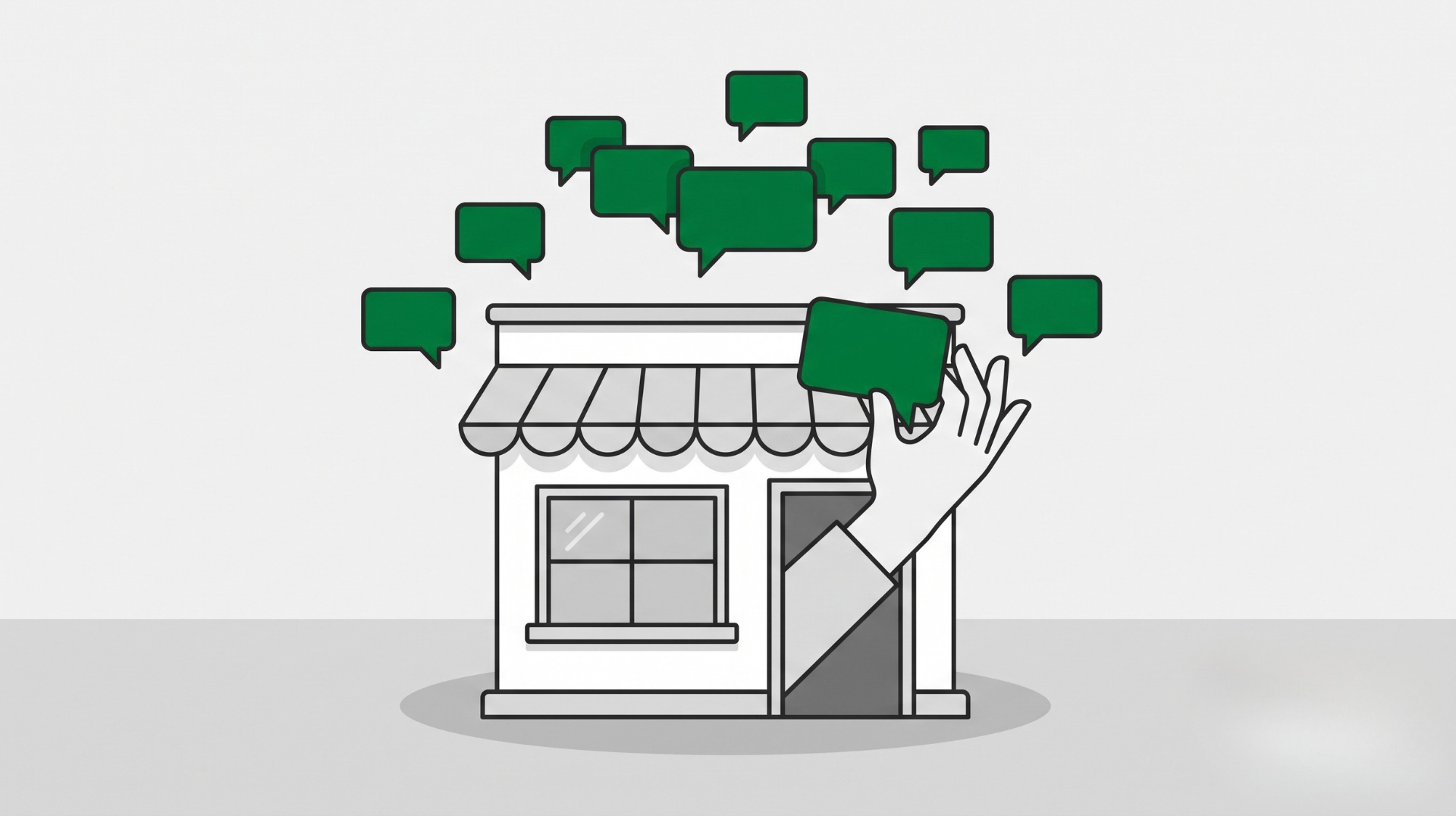
The bottom line: the more your business is cited, mentioned, and described consistently in trustworthy places, the more credible you’ll appear to both search engines and AI tools. This is what we call The Invisibility Gap. Many great local businesses have built real reputations in their communities but simply don’t show up when people ask AI tools for recommendations. Closing that gap starts with building your reputation across the web. We wrote about this in more detail in The 3 C’s of AI Visibility.
Results: Keep Measuring What Matters
You still need to track what’s working. That part hasn’t changed. But how you measure is evolving.
With Google, we’ve always tracked rankings, traffic, and conversions. Those metrics still matter, but they don’t tell the whole story anymore. As AI tools like ChatGPT and Google AI Overviews answer more questions directly, you may see your impressions hold steady (or even grow) while click-through traffic flattens. That doesn’t necessarily mean your SEO is failing. It means the way people interact with search results is changing.
That’s why it’s important to pay attention to impressions and visibility, not just clicks and traffic. If your site is showing up in search results and being referenced by AI tools, you’re building brand awareness even when people don’t click through. Over time, that visibility drives business in ways that are harder to track but still very real.
We also need to be honest: measuring visibility in AI search tools is still in its early stages. There’s no Google Search Console equivalent for ChatGPT. The tools for tracking AI visibility are still emerging, and we’re watching this closely. For now, the ChatGPT exercise we mentioned earlier (testing how AI tools describe your business) is one of the best manual checks available.
And don’t lose sight of the metrics that matter most: leads, calls, consultations, revenue. Rankings and impressions are a means to an end. The businesses that focus on outcomes rather than vanity metrics will be the ones that thrive, regardless of how search evolves.
This is where The Growth Formula comes in. SEO serves the Traffic lever, but Traffic alone doesn’t grow your business. If your website isn’t converting that traffic into leads (Conversion) and you’re not maximizing the value of each customer (Customer Value), more visibility won’t solve the problem.
AI SEO Readiness Checklist
Ask yourself:
- Do we publish helpful, in-depth content that answers our customers’ real questions?
- Are we earning high-quality mentions and backlinks from trusted sites?
- Do we regularly update our content and keep business listings accurate?
- Is our content structured clearly with FAQs, summaries, and schema markup?
- Have we tested how AI tools like ChatGPT describe our business?
If you answered yes to most of those, you’re in a strong position to stay visible as search evolves. If not, now’s the time to improve.
Need Help With SEO?
If you’re looking to improve your Google rankings and future-proof your visibility in AI tools like ChatGPT, we’d love to take a look at your current SEO and identify the biggest opportunities.
Get a Free SEO Assessment & Quote
Are You an Agency Owner or Consultant?
If you’re looking for white-label SEO services, see how we can partner to support your growth.